

Fast answer
Executive jet aviation gives you control, privacy, and efficiency for business or leisure travel. Learn how private flights work and explore your options.
Strip away the image of it, and executive jet aviation is a tool for controlling the one thing you cannot buy more of: time. It is the slice of private aviation built for business and serious leisure travel, and the people who use it well treat it less as a luxury than as a way to get a day back.
This guide covers what it actually is, how it compares to flying commercial, the four ways to access a jet, and how to pick the one that fits.
What is executive jet aviation?
Executive jet aviation is the sector of private aviation built for business and luxury travel. More usefully, it is a way to stop building your schedule around airline hubs and start flying on your own terms — bypassing crowded terminals, using the airports closest to your destination, and setting an itinerary that works for you.
For a business leader covering several cities in a day, or a family that just wants a seamless trip, it turns travel from a logistical hurdle into productive, restful time. And contrary to the usual myth, it is not reserved for the ultra-wealthy. Plenty of companies treat private flights as a straightforward efficiency tool, with a provider handling the detail.
How does it compare to flying commercial?
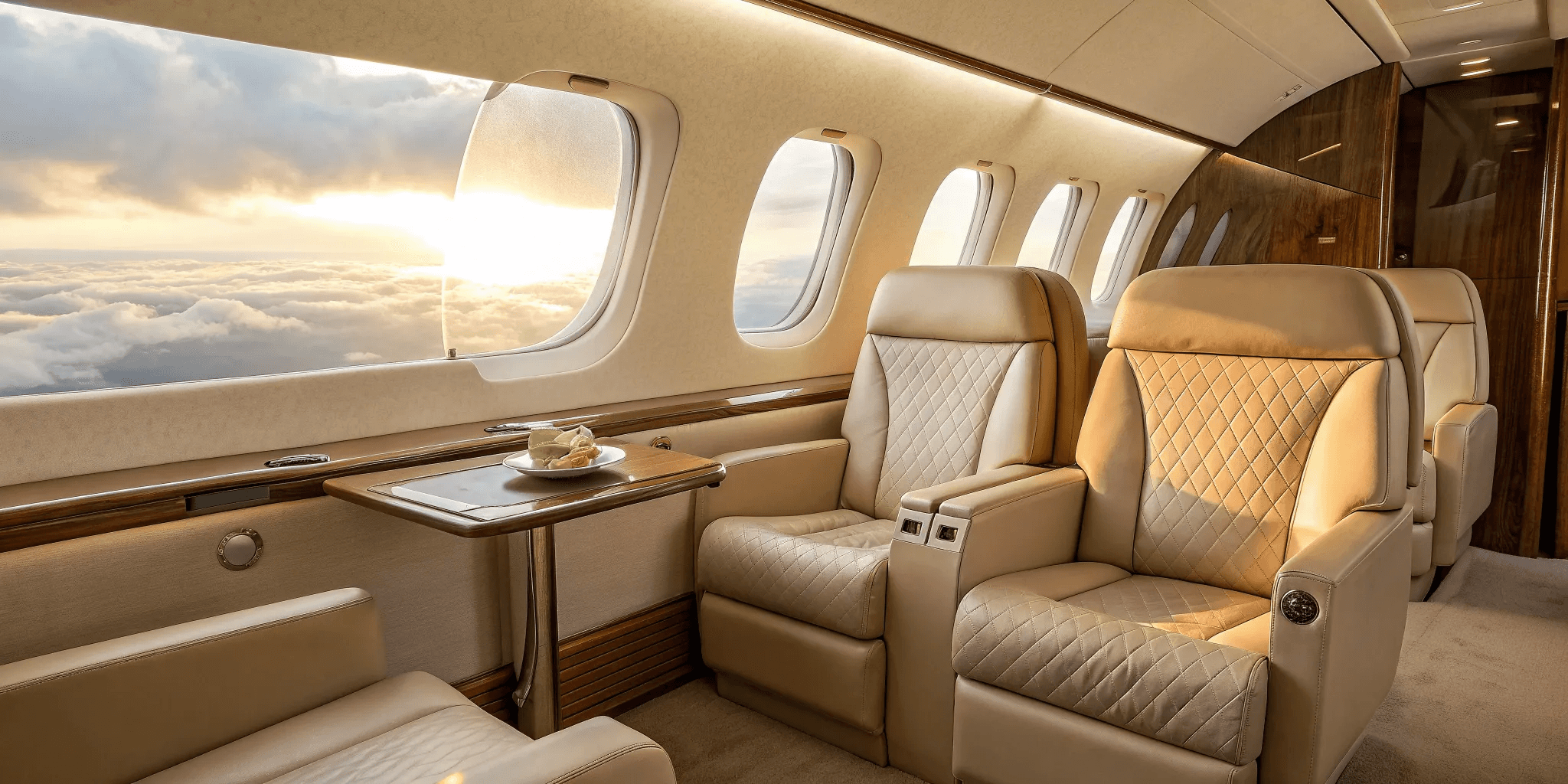
Commercial airlines optimize for moving the masses. Executive aviation optimizes for the individual traveler, and that changes the whole experience. You set your own departure and arrival times and can change them late, with no fixed timetable and no connections. Check-in is minimal — no long security lines, just arrive 15 to 30 minutes before departure and walk to the jet. The cabin is exclusively yours, for a confidential conversation or uninterrupted rest, and it is fitted out — space, Wi-Fi, catering — around you.
What are your options for flying private?
There are four main ways to access an executive jet. The right one comes down to how often you fly and how much you want to commit upfront.
| Option | How it works | Best suited to |
|---|---|---|
| On-demand charter | Book a specific aircraft per trip, no commitment | Unpredictable or less frequent travel |
| Jet card / membership | Prepaid hours, or funds on account, at set rates | Frequent flyers who want predictable pricing |
| Fractional ownership | Buy a share of an aircraft, plus management fees | Those flying 50-plus hours a year |
| Aircraft management | A company runs an aircraft you already own | Existing jet owners |
A jet card prepays for blocks of hours at a fixed rate; a modern alternative, the TrueSkies Reserve program, gives the consistency of a card without the restrictive terms. Fractional ownership buys a deeded share and a set number of annual hours. And aircraft management hands the crewing, maintenance, compliance, and scheduling of an owned jet to a company, which can also place it on a charter certificate to earn revenue when you are not flying.
How are private flights priced?
Private charter pricing is dynamic — built around your specific trip, so you only pay for what you need. The aircraft is the largest factor, since larger, longer-range jets carry higher hourly rates as fuel, maintenance, and crew costs scale with size. After that it is flight time and distance, where most quotes are an hourly rate multiplied by time aloft, so a cross-country trip prices higher than a regional hop.
The rest is predictable: airport and handling fees at the FBOs you use, which run higher at major international airports; season, since holidays and peak periods tighten availability and lift rates; and additional services — crew overnights, repositioning, international handling, winter de-icing — all itemized separately. For the full breakdown, see our guide to how much it costs to charter a private jet.
How do you choose the right aviation solution?
There is no single best way to fly private, only the one that fits you, and you get there in four steps.
Start by assessing your travel — look back over the past year or two at how many hours you flew, domestic versus international, and your typical passenger count. Sporadic travel points to on-demand charter; frequent, predictable travel points to a membership or card. Then evaluate providers, looking for a partner whose model and service philosophy match your needs, with genuine transparency. Prioritize safety above all — verify third-party safety ratings from independent auditors such as ARGUS or Wyvern, and ask about the Safety Management System and crew experience. And before you sign anything, understand the contract: a transparent provider details every cost and explains peak-day policies, cancellation terms, and how unused funds are handled. When you are ready, request a quote for a clear picture of your specific trip.
Related Articles
Frequently Asked Questions
When should I choose on-demand charter versus a membership program?
On-demand charter is your pay-as-you-go option — ideal when travel is infrequent or unpredictable, with the freedom to book any aircraft for any trip and no long-term commitment. A membership program like TrueSkies Reserve suits regular flyers, adding consistency, guaranteed availability, and streamlined pricing.
How far in advance do I need to book a private flight?
Booking ahead helps, especially around holidays and peak seasons, but flexibility is a core advantage — a flight can often be arranged with just a few hours’ notice. A few days’ notice gives the best selection and pricing.
What exactly is an FBO?
An FBO — Fixed-Base Operator — is a private terminal at an airport. Instead of crowds and long lines, you use a discreet lounge, clear security in minutes, and often drive directly onto the tarmac to board.
Can I bring my pet on a private jet?
Yes — one of the most appreciated benefits of flying private. Pets travel with you in the cabin rather than in cargo. Tell your provider ahead of time so arrangements and paperwork are in order; our guide to flying private with pets covers the detail.
What happens if my plans change at the last minute?
Adjusting an itinerary, changing the passenger list, or shifting a departure is a core benefit of flying private. Each trip has its own cancellation terms in the agreement, but clear communication with your provider is what makes a late change manageable.