
Fast answer
Flying private with pets means comfort and peace of mind. Learn what to expect, how to prepare, and which documents you’ll need for a smooth trip.
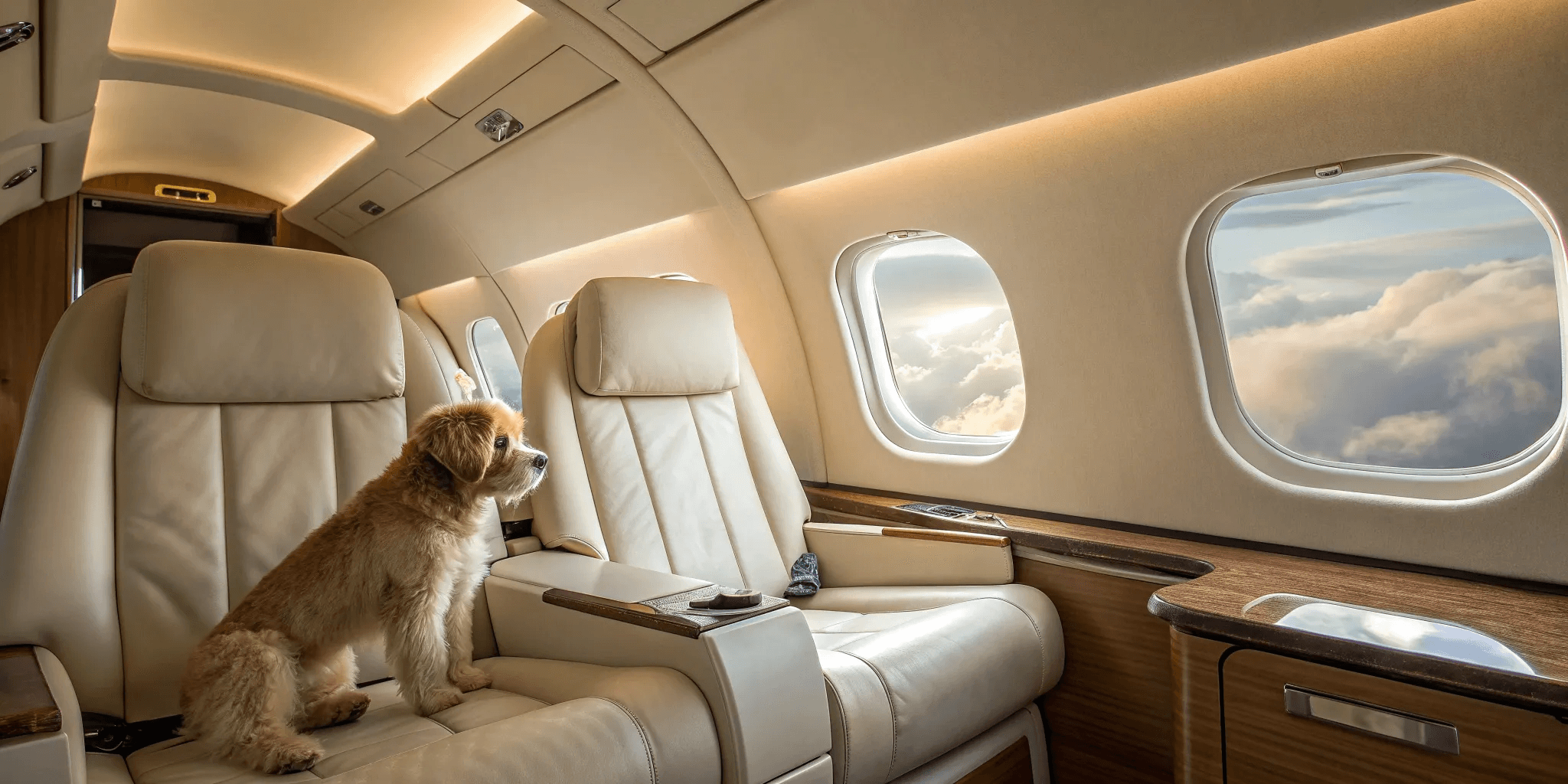
For most owners, a pet is family — and no family member should ride in a crate in the cargo hold. Commercial flights too often treat an animal like luggage. Flying private is the alternative: your pet stays beside you in the cabin, where you can reassure and look after them the whole way.
Here is what to expect, what it costs, the paperwork your pet needs, and how to get them ready for a calm flight.
Get a Quote for Flying With Pets
How is flying private different for pets?
Flying private changes the experience for an animal completely — your pet is a valued passenger, not freight. Three differences matter most.
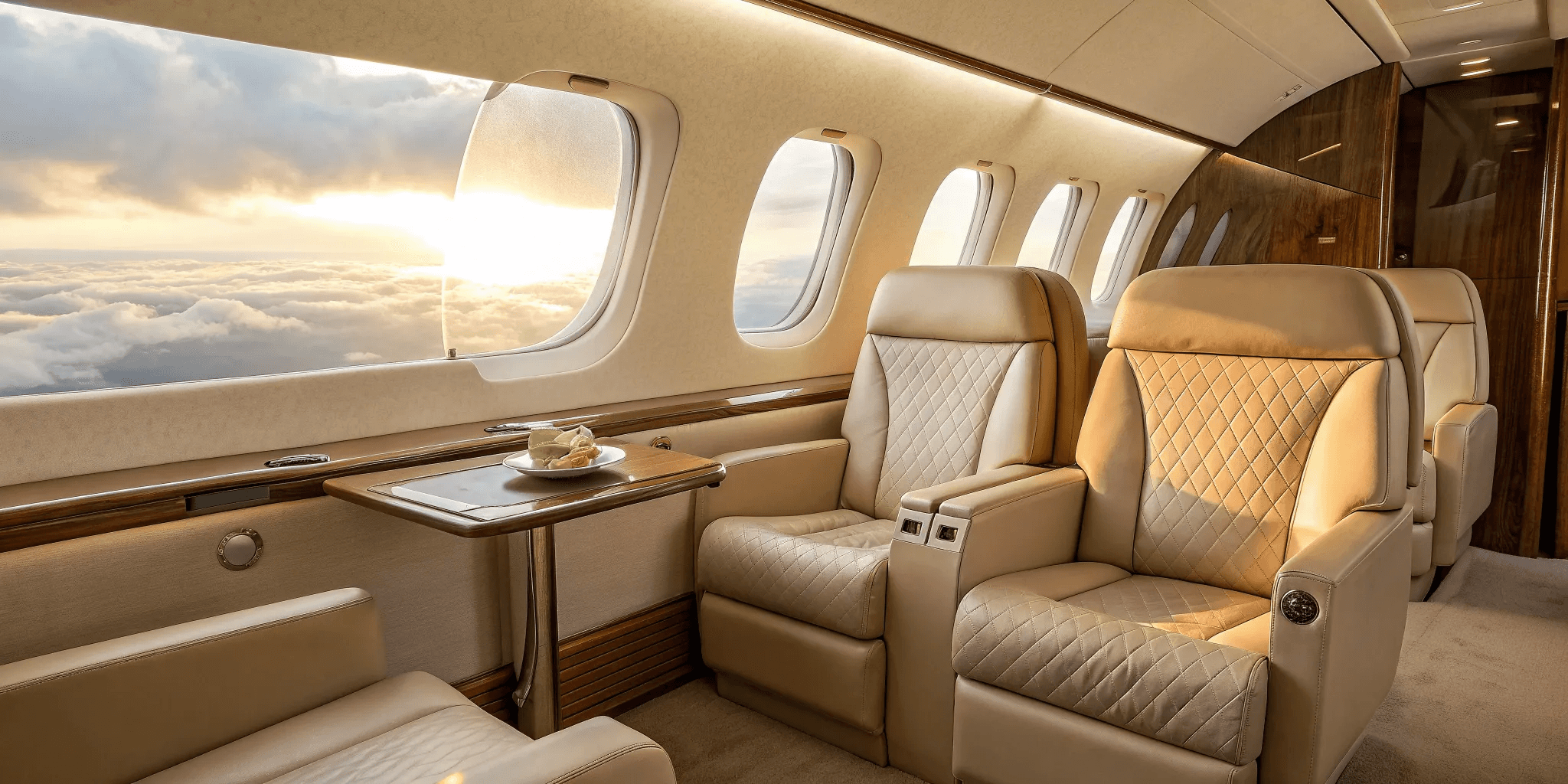
The first is cabin, not cargo. Your pet stays at your side, where commercial flights would consign them to a hold that is noisy, unfamiliar, and subject to temperature extremes. On a private charter that anxiety simply disappears, and you can reassure them throughout. The second is the absence of size and breed restrictions: commercial cabins cap pets by weight and breed, which leaves owners of larger dogs, or snub-nosed breeds like pugs and French bulldogs, with only the hold. Private operators welcome animals of all shapes and sizes — and not only cats and dogs. The third is simply less stress all round. You skip the crowded check-in counters and security lines, arrive minutes before departure, and board directly, and your pet has room to settle rather than being wedged into a carrier under a seat.
What does it cost to fly private with a pet?
The price of the trip is set by the aircraft you choose — its hourly rate, your route, your passenger count — not by the animal in the cabin. For a full breakdown of how charter pricing works, our guide to how much it costs to charter a private jet takes a quote apart line by line.
What paperwork does your pet need to fly?
Flying private is flexible, but health and safety documentation still applies — it protects your pet and the animal population at your destination. Requirements vary, so confirm yours with your charter provider, and for anything crossing a border, start early.
| Trip | What your pet needs |
|---|---|
| Domestic (within the U.S.) | A Certificate of Veterinary Inspection (CVI) from a licensed vet, usually issued within 10–30 days of travel, plus proof of a current rabies vaccination. |
| International | A pet passport or a USDA-endorsed health certificate, an ISO-compliant microchip, and — depending on the country — extra vaccination or parasite protocols, or a rabies titer blood test. |
Flying private does not mean no rules apply. But a good provider will guide you through exactly what your itinerary requires.
How do you prepare your pet for a smooth flight?
A little preparation makes the cabin feel like home. Start with a vet visit to confirm your pet is fit to fly and vaccinations are current, and to collect the CVI and any paperwork your destination needs. On the day, keep things calm — pets read your cues, so a long walk or some playtime before departure burns off energy and helps them rest in flight, and the private cabin is a quiet space where you can give them your full attention.
The one thing not to forget is their bag:
Pack a pet carry-on
- A favorite blanket or bed, so the cabin smells like home
- Their regular food and treats, plus a portable water bowl
- A familiar toy or two
- The pet passport, for international trips
What should you ask your charter provider?
Pet policies differ between operators, so have a clear conversation before you book. Ask whether there is any limit on the number of pets, confirm where your pet can be during the flight, and check exactly what documentation your route requires.
A transparent provider welcomes all of it. At TrueSkies we treat every flight as its own mission — when a client recently insisted his new puppy travel with him rather than in a cargo hold, we sourced an aircraft that let the two of them fly together in the cabin. That is the standard: the aircraft matched to you and your animal companion, not the other way around.
Related Articles
Frequently Asked Questions
Do I have to pay an extra fee to bring my pet on a private jet?
No. Unlike commercial airlines and their separate pet fees, your animal is simply another passenger. The price you are quoted is for chartering the whole aircraft — no surprise charges for bringing your pet.
Are there restrictions on my pet's size or breed?
For the most part, no. The strict size, weight, and breed rules of commercial cabins do not apply — a Great Dane is as welcome as a cat. Discuss your pet’s specific needs with your provider so the aircraft is a good fit.
What's the minimum paperwork I need for a domestic flight with my pet?
For travel within the U.S., you will almost always need two documents: a recent health certificate (Certificate of Veterinary Inspection) from your vet, and proof of a current rabies vaccination.
Does my pet need to be in a carrier during the flight?
No — your pet is not required to be confined and can relax in the cabin with you. Some owners use a carrier or harness for takeoff and landing for extra security, but the freedom to sit with you is a core benefit of flying private.
How can I make sure the aircraft is suitable for my pet?
Talk to your charter provider — share your pet’s size, temperament, and any special requirements. A good provider uses that to source an aircraft with the right cabin space and amenities for a safe, comfortable flight.