
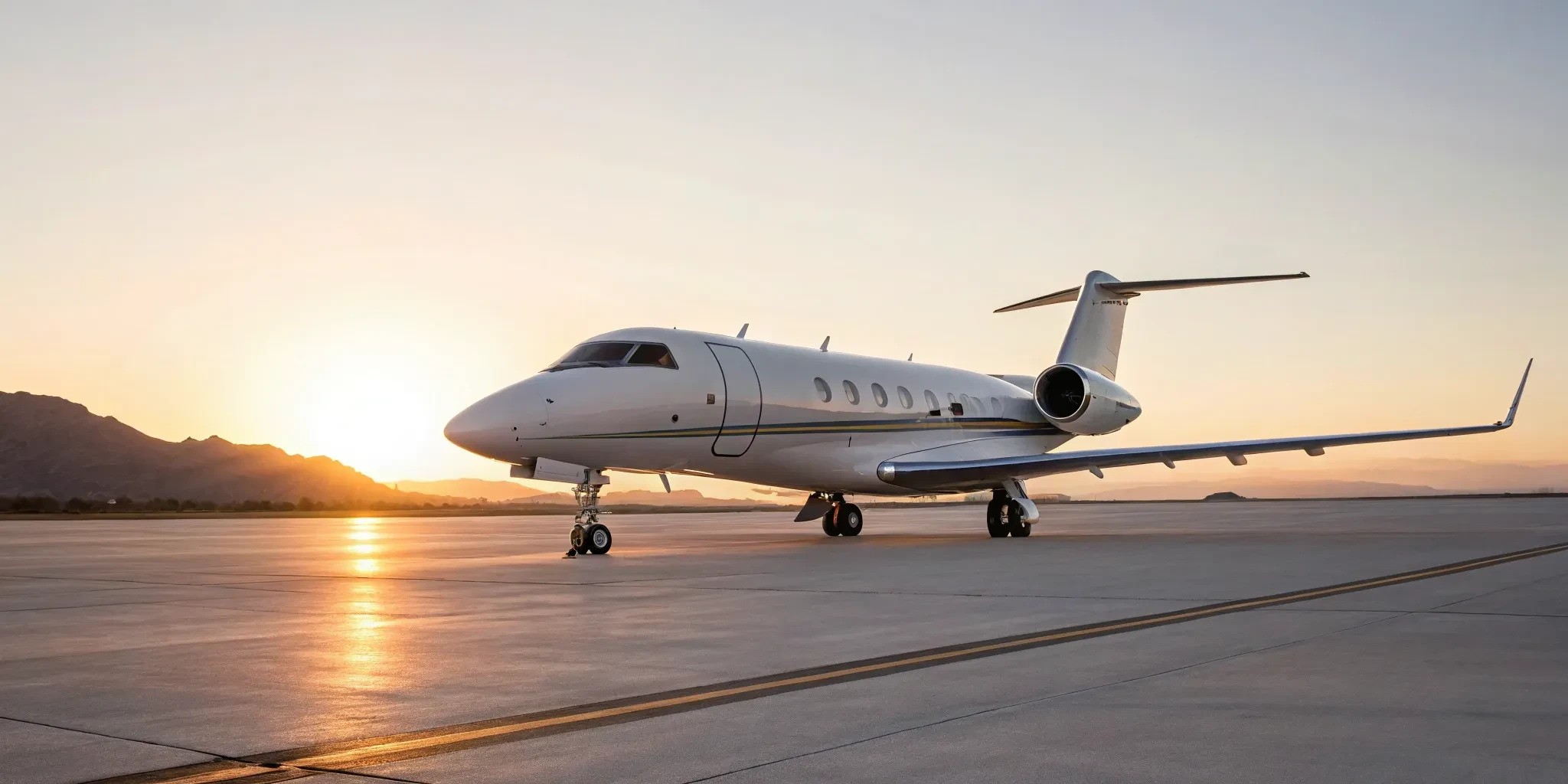
Private Jet for Your Honeymoon: Romantic Destinations & Costs
Your honeymoon is not a trip you plan twice. It is the one journey in your life where the experience of getting there should be every bit as memorable as the destination itself — and for a growing number of couples, a private jet charter has become the opening chapter of that story.
The assumption most people make is that a private jet honeymoon is the exclusive domain of the ultra-wealthy. The reality is more nuanced. Private aviation has become meaningfully more accessible in the on-demand charter market, and for a trip this significant, the calculus of cost versus experience deserves a clear-eyed look rather than a reflexive dismissal. When you factor in the stress eliminated, the privacy gained, the time saved, and the unique romance of a cabin that belongs entirely to you and your new spouse — the value proposition is stronger than most couples initially realise.
This guide covers everything you need to know to plan a private jet honeymoon: the world's most romantic destinations accessible by charter, real cost ranges by route and aircraft category, what the experience actually looks and feels like on the day, and how TrueSkies structures honeymoon charters end-to-end so the only thing you have to think about is each other.

Key Takeaways
A private jet honeymoon costs far less than most couples expect: For Caribbean and domestic US destinations, charter costs can start from $16,000–$35,000 one-way on a light or midsize jet — a significant but achievable investment for a once-in-a-lifetime trip, particularly when weighed against the total spend of a luxury honeymoon.
The destination shapes the aircraft, not the other way around: Ultra-long-range jets open up the Maldives, Bora Bora, and Southeast Asia; heavy jets handle Europe and transatlantic routes; midsize and super midsize jets are ideal for Caribbean and domestic US honeymoon travel. Matching aircraft to route is where cost efficiency begins.
Every element of a private jet honeymoon can be personalised before you board: From champagne and catering to flowers, personalised playlists, and bespoke in-flight setups, the aircraft cabin is a blank canvas for the kind of detail that commercial travel simply cannot provide. The right aviation partner coordinates all of it as part of the booking — not as an afterthought.
Why Private Aviation Is the Right Choice for a Honeymoon
Most couples spend months planning the perfect honeymoon — the destination, the hotel, the experiences. What rarely receives the same attention is how they actually get there. A fourteen-hour commercial journey with a layover in a busy hub airport, a queue through immigration, and the grinding reality of economy-class travel is not how you want to begin the first trip of your married life. Private aviation changes the entire equation, not just at the margins.
Privacy From the Moment You Leave
The defining experience of a private jet honeymoon begins long before the aircraft lifts off. At a private terminal — an FBO (Fixed Base Operator), the private equivalent of a commercial gate — you and your partner arrive to a dedicated lounge, often with champagne waiting, and board within minutes. There is no security line. No gate crowding. No strangers within earshot of your conversations. For one of the most intimate and emotionally charged trips of your life, the privacy of the entire journey — from kerbside to destination — is not a luxury detail. It is the point.
Once airborne, the cabin belongs entirely to you. The crew is there exclusively for the two of you. The pace, the mood, the conversation — all of it is yours to set. This is categorically different from a business-class upgrade on a commercial flight, where privacy is relative and the environment is shared. On a charter, the aircraft is a private space that happens to move at 500 miles per hour.
The Time Argument — More Honeymoon, Less Transit
Private aviation's most underappreciated advantage for honeymoon travel is what it does to the clock. For a couple travelling from New York to the Caribbean, a commercial routing via a major hub can consume seven to nine hours door-to-door, including check-in, security, connection time, and ground transport at the other end. A direct private charter on the same route typically takes three and a half to five hours total, with a car waiting at the FBO ramp. That is an extra day of honeymoon — in the destination rather than in transit.
For longer-haul routes — Europe, the Maldives, Bora Bora — the time saving is even more meaningful. Ultra-long-range jets can fly certain transatlantic or transpacific routes non-stop that would require a connection commercially, eliminating the layover entirely. The investment in private aviation looks different when you measure it in reclaimed honeymoon hours rather than ticket cost.
The Experience of the Flight Itself
On a commercial flight, the journey to your honeymoon is something to endure. On a private charter, it is something to enjoy. Catering ordered to your specification — a proper dinner, your preferred wines, a celebratory dessert — served on your schedule at 40,000 feet. A cabin designed for comfort and conversation, not maximum seat density. The ability to move freely, to sleep properly on a lie-flat seat if the route is overnight, and to arrive feeling genuinely rested rather than exhausted.
This matters most on long-haul routes, where the difference between arriving in the Maldives or the Amalfi Coast in a light, relaxed state versus a depleted one directly shapes the first twenty-four hours of your trip. A honeymoon is not an itinerary to get through — it is an experience to be fully present for. How you arrive sets the tone.
The World's Most Romantic Private Jet Honeymoon Destinations
The destination you choose shapes every other decision in a private jet honeymoon — the aircraft required, the flight time, the cost, and the experience itself. Some of the world's most romantic locations are also among the easiest to reach by charter; others require ultra-long-range jets and more complex planning. Here is the landscape, mapped honestly by what each destination actually demands.
The Maldives: The Pinnacle of Private Jet Romance
No destination has a stronger association with the private jet honeymoon than the Maldives — and for good reason. The combination of overwater villas, extraordinary marine life, and near-total isolation from the outside world makes it a singular setting for a first trip as a couple. The practical consideration is aircraft range: from the US East Coast, the Maldives requires an ultra-long-range jet such as a Gulfstream G650, Bombardier Global 7500, or similar, with a fuel stop or a non-stop routing depending on the specific aircraft. From New York, expect total flight times of eighteen to twenty-two hours including any technical stops.
Charter costs for a Maldives honeymoon from the US East Coast typically begin at $180,000–$280,000 for the one-way trip, with round-trip costs scaled accordingly. For couples whose honeymoon budget is already in the range that a top Maldivian resort demands — where villa rates of $3,000–$10,000 per night are standard — the private jet adds a meaningful layer of experience to what is already a premium investment.
Santorini and the Greek Islands: European Romance by Heavy Jet
Santorini remains one of the most searched honeymoon destinations in the world, and for good reason: the caldera views, the sunset dinners, the distinctive cave hotels carved into the volcanic cliffside. By private jet from the US East Coast, the routing typically uses a heavy jet — a Gulfstream G550, Bombardier Global 6000, or Dassault Falcon 7X — with one fuel stop, usually in Iceland or the Azores, before continuing to Athens International (ATH) or the smaller Santorini Airport (JTR). Total flight time from New York runs ten to thirteen hours depending on routing and winds.
For couples considering Greece more broadly — Mykonos, Paros, Corfu — the approach is similar: fly into Athens, then transfer to the island by a short turboprop or helicopter leg. TrueSkies coordinates the full multi-leg logistics as part of a single honeymoon itinerary, so the transition from jet to island hopper is seamless rather than self-managed. Our on-demand charter model covers every leg of the journey under one booking.
The Amalfi Coast and Italian Riviera: Old-World Luxury
Positano, Ravello, Portofino — the Italian coastline offers some of the most dramatic and romantic scenery in Europe, and it pairs naturally with a private jet arrival into Naples (NAP) or Genoa (GOA). From the US East Coast on a heavy jet, the routing mirrors the Greek Islands in terms of aircraft requirement and flight time, landing you in southern or northern Italy in nine to twelve hours depending on departure airport and winds.
One of the distinctive advantages of flying private to the Italian Riviera is airport access. The smaller coastal towns — Portofino, Ravello — are not served commercially at a meaningful scale. A private charter to Genoa or Naples gets you significantly closer to your actual destination than any commercial routing through Rome or Milan, reducing ground transfer time and eliminating the very-un-romantic final hours of a commercial journey. See how private jets open up access in our broader guide to chartering a private jet to Europe.
The Caribbean: St. Barths, Turks & Caicos, and Beyond
For US-based couples, the Caribbean represents the most accessible tier of private jet honeymoon travel, both in terms of cost and flight time. A midsize or super midsize jet from New York or Miami reaches Turks & Caicos, St. Barths, Anguilla, or the Bahamas in three and a half to five hours, with charter costs that begin at a level that many couples can meaningfully compare against the total spend of a premium commercial honeymoon once hotels, transfers, and ancillary costs are included. The Caribbean is also the destination category where empty leg opportunities are most consistently available — a factor that can meaningfully reduce the cost for flexible planners.
St. Barths deserves particular mention as a private aviation honeymoon destination. The island's airport, Gustaf III, has one of the most dramatic approaches in the world — a steep descent over a hilltop directly onto a short runway flanked by the Caribbean. Commercial access to St. Barths is only possible by turboprop from nearby Saint Martin; a private jet into St. Barths itself is a genuine exclusive. For many couples, the arrival alone becomes one of the defining memories of the trip.
Bora Bora and the South Pacific: The Furthest Horizon
Bora Bora sits in a category of its own — more remote than the Maldives for US West Coast travellers, and requiring careful aircraft selection. From Los Angeles, a direct charter on an ultra-long-range jet reaches Bora Bora (BOB) in eight to nine hours non-stop, making it far more manageable than most couples assume. For East Coast departures, a technical fuel stop on the US West Coast adds a leg but keeps the journey relatively efficient on the right aircraft.
Bora Bora's appeal is similar to the Maldives — overwater bungalows, extraordinary lagoon colours, complete seclusion — but with a distinctly Polynesian character that many couples find even more romantic. The combination of a non-stop private charter from LA and a resort that feels entirely removed from the outside world is, for certain couples, simply unmatched.
Private Jet Honeymoon: Indicative Cost Ranges by Destination
The following ranges reflect indicative one-way charter costs in 2026 for a couple (2 passengers). Round-trip costs apply the same logic to the return leg. Costs vary materially based on departure airport, specific aircraft availability, seasonality, and lead time. Request a quote for your specific routing.
Destination | Aircraft Category | Flight Time | Est. Charter Cost (one way) |
Maldives (from NYC) | Ultra Long Range | ~18–20 hrs | $180,000–$280,000+ |
Santorini (from NYC) | Heavy Jet | ~10–12 hrs | $95,000–$160,000+ |
Amalfi Coast (from NYC) | Heavy Jet | ~9–11 hrs | $90,000–$150,000+ |
St. Barths (from NYC) | Light / Midsize | ~4–5 hrs | $18,000–$35,000 |
Turks & Caicos (from NYC) | Light / Midsize | ~3.5–4 hrs | $16,000–$30,000 |
Bora Bora (from LA) | Ultra Long Range | ~8–9 hrs | $85,000–$145,000 |
Aspen (from NYC) | Midsize / Super Mid | ~4–5 hrs | $22,000–$40,000 |
Napa Valley (from NYC) | Super Midsize | ~5–6 hrs | $35,000–$60,000 |
Costs are indicative and reflect 2026 US charter market rates. International routes carry additional handling, overflight, and crew expenses.
What Determines the Cost of a Honeymoon Charter?
Understanding what drives private jet charter pricing helps you evaluate quotes accurately and make decisions that optimise your budget without compromising the experience. The cost of a honeymoon charter is not arbitrary — it is built from a consistent set of components that respond predictably to the choices you make.
Aircraft Category and Range
The largest single variable in charter cost is the aircraft required by your destination. A light jet to Turks & Caicos and an ultra-long-range jet to the Maldives represent entirely different cost scales — not because of luxury pricing, but because of the fundamental economics of aircraft operating cost, fuel burn, and crew requirements at different range and capability tiers. The rule is simple: the aircraft must be capable of the mission, and the mission drives the cost. Our guide to factors affecting jet charter prices covers this in full.
For Caribbean honeymoons, a midsize or super midsize jet — aircraft like the Bombardier Challenger 350 or Cessna Citation Latitude — represents the ideal balance of cabin comfort and cost efficiency. For transatlantic routes to Europe, a heavy jet is the entry point for non-stop or single-stop routing. For the Maldives, Bora Bora, and ultra-long-haul destinations, an ultra-long-range aircraft is not optional — it is simply what the mission requires.
Positioning Fees and One-Way Routing
Charter pricing includes the cost of repositioning the aircraft — flying it to your departure airport before the trip, and returning it to its base after. These positioning costs typically represent 15–25% of a one-way quote on domestic routes and can be higher for remote departure airports. One of the most effective ways to reduce the total cost of a honeymoon charter is to select a departure airport where aircraft are already based, minimising or eliminating the repositioning charge. Your TrueSkies advisor will always source from the most efficient base relative to your departure point.
On round-trip honeymoon bookings, the return-leg positioning cost is often absorbed because the aircraft stays with you at the destination — reducing the total cost versus booking two separate one-way legs independently. This is the same economic logic that makes multi-city corporate itineraries significantly more cost-efficient than equivalent one-way bookings.
Lead Time and Seasonality
Honeymoon travel has strong seasonal patterns that directly affect charter availability and pricing. The peak wedding and honeymoon months — May through September — coincide with peak charter demand for the same Caribbean, Mediterranean, and European destinations. Aircraft availability tightens, particularly in the super midsize and heavy jet categories, and rates move accordingly. For honeymoons in these months, booking four to eight weeks ahead is strongly advisable. For popular events-adjacent dates — weddings near the Monaco Grand Prix or Cannes season — even earlier.
Outside peak windows, the same destinations command meaningfully lower rates and offer a wider selection of aircraft. For couples with flexibility on timing, a honeymoon in late April, early October, or November accesses the same romantic destinations at 15–25% lower charter cost compared to the mid-summer peak.
Catering and Personalisation
Bespoke catering, champagne, flowers, personalised cabin setups — these are not standard inclusions on most charter quotes, but they are also not major cost items relative to the overall charter investment. A fully bespoke honeymoon catering package typically adds $500–$2,500 to the total charter cost depending on the complexity of the setup and the length of the flight. At this scale, the incremental cost of transforming the flight into a genuinely romantic experience is trivial relative to what most couples invest in their honeymoon overall.
What a Private Jet Honeymoon Actually Looks Like
The practicalities of how a private jet honeymoon unfolds on the day matter as much as the cost and the destination. Understanding what the experience is actually like — from the moment you arrive at the private terminal to the moment the aircraft door opens at your destination — helps you make the right decisions in advance and arrive with the right expectations.
Arrival at the FBO: The Private Terminal Experience
A private FBO terminal is the operational and experiential opposite of a commercial departure hall. You arrive by car directly to a private facility — in most major US cities, these are purpose-built lounges that are quiet, elegant, and unstaffed except by personnel whose only job is to make your departure seamless. The aircraft is visible through the lounge window, already prepared. Your luggage is loaded directly from the car to the hold. Check-in, in the commercial sense, does not exist.
At the top-tier FBO operators — Signature Aviation, Atlantic Aviation, Jet Aviation — the lounge environment is comparable to a boutique hotel: comfortable seating, a staffed bar, shower facilities, and often a dedicated suite for high-profile departures. For a honeymoon departure, TrueSkies can arrange for the lounge to be set up with champagne, flowers, and whatever specific touches you would like before you arrive. The departure becomes its own event.
The Cabin: What Two Passengers on a Private Charter Actually Enjoy
For a couple chartering a midsize or super midsize jet, the cabin is designed for eight to ten passengers but occupied by two. The practical effect of this is space that feels extraordinary by any comparison — the ability to spread out, to reconfigure the cabin for dining or relaxing, to move freely between the front and rear of the aircraft, and to treat the space as a private environment rather than a seat assignment. Most midsize and larger jets have a dedicated luggage hold so bags never enter the cabin at all.
Catering on a honeymoon charter is ordered to your specification before departure — not selected from a trolley mid-flight. A chef at the departure FBO prepares your chosen meal, which is loaded onto the aircraft and served by the crew at whatever point in the flight you prefer. Champagne, wine, cocktails — the bar is stocked to your brief. For a long-haul honeymoon flight, this means a genuine fine-dining experience at altitude, in complete privacy.
Arrival at Your Destination: The Seamless Continuation
At the destination FBO, the same principle applies: a private terminal, a car on the ramp, and no immigration queue in most cases (for international routes, customs and immigration processes vary by country, but TrueSkies handles all documentation and facilitation in advance). For the Maldives, Bora Bora, and similar destinations where the final transfer involves a seaplane or speedboat to your specific island resort, TrueSkies coordinates the connection as part of the full itinerary — the aircraft door opens and the next step is already arranged.
Think of a private jet honeymoon less like booking a flight and more like commissioning a complete first chapter of your trip — one that flows without interruption from your front door to your resort suite, with every element confirmed in advance and every detail managed by people whose only job is making sure it is perfect.
How to Plan a Private Jet Honeymoon: A Step-by-Step Framework
Planning a private jet honeymoon well requires a slightly different sequence than booking a conventional trip. The charter availability, aircraft range requirements, and personalisation logistics mean that the flight should be the first element confirmed, not the last. Here is how the planning process should unfold.
Step 1: Fix the Destination Before the Aircraft
The destination determines everything else — the aircraft category required, the feasible departure airports, the total flight time, and the cost framework. Before engaging with a charter broker, agree on the destination as a couple with full clarity. The difference between a Caribbean honeymoon and a Maldives honeymoon is not just geographical — it is a cost difference of $150,000+ and a completely different aircraft category. Get the destination right first, then let the logistics flow from that decision.
If you have a budget constraint but genuine destination flexibility, the conversation with your TrueSkies advisor can start from the budget — "we want to spend approximately this, and we are open to where that takes us" — and the best available options within that parameter will be mapped for you. There is almost always a version of the private jet honeymoon that works within a well-defined budget.
Step 2: Engage Your Aviation Advisor Early
The most common planning mistake is treating the charter booking as the final logistical step, after the hotel, the activities, and the dates have all been locked. The charter booking should be the first call you make — because aircraft availability, particularly for super midsize and heavy jets in peak season, is genuinely limited, and the best options disappear weeks before the travel date. Your TrueSkies advisor will also provide guidance on how to structure the booking and what questions to ask a charter provider to ensure you are comparing quotes on a like-for-like basis.
Step 3: Build the Personalisation Brief
Once the aircraft and routing are confirmed, the personalisation of the flight is the next step — and it is where most couples underinvest in advance planning. Catering preferences, dietary requirements, preferred wines and spirits, cabin flowers, a specific playlist, surprise elements for your partner: all of these are far easier to arrange when they are briefed two or more weeks ahead of departure. At TrueSkies, your advisor manages this brief directly with the FBO and operator, so nothing is missed and nothing is improvised on the day.
For couples planning a more elaborate in-flight experience — a wedding cake served at altitude, a cabin decorated for arrival at a specific destination, a surprise element coordinated with the ground team at the other end — the lead time matters even more. These are absolutely achievable, but they require communication and confirmation well in advance of the flight date.
Step 4: Confirm Ground Logistics at Both Ends
The private jet experience is only as seamless as the ground logistics that bookend it. A car on the ramp at departure, a transfer to the island resort at destination — these elements need to be confirmed with the same rigour as the flight itself. TrueSkies coordinates all ground transportation as a standard part of every honeymoon itinerary. This is not a bolt-on service; it is part of the product. The alternative — leaving ground transport as a self-managed detail — introduces the kind of friction that the entire private aviation experience is designed to eliminate.
How TrueSkies Structures a Honeymoon Charter
A honeymoon is not a standard charter booking. The emotional significance of the occasion, the expectation of personalisation, and the zero-tolerance threshold for logistical friction mean that the way an aviation partner manages a honeymoon itinerary needs to reflect the nature of the trip — not just the operational mechanics of getting from A to B.
The Full-Itinerary Approach
When a couple comes to TrueSkies for a honeymoon charter, we do not begin by selecting an aircraft. We begin by understanding the trip as a whole: the destination, the resort, the style of experience the couple is looking for, and the specific moments within the journey that matter most to them. From that conversation, we design the full itinerary — departure, in-flight experience, arrival, and return — as a single, coherent product, not as a flight with logistics attached.
This approach is part of what makes the TrueSkies Reserve program particularly well-suited to couples who travel regularly and want the same standard of service on every trip, including honeymoon and anniversary travel. Reserve members benefit from priority aircraft sourcing, pre-negotiated rates, and a dedicated advisor who knows their preferences and manages every itinerary end-to-end.
Operator Selection for Romantic Travel
Not all Part 135 charter operators approach a honeymoon booking with the same level of care. TrueSkies sources exclusively from operators who have demonstrable experience with high-touch, client-facing travel — where the crew understands that this is not a business trip, that the cabin environment matters, and that the standards expected are those of a luxury experience rather than a functional transit. We brief the crew on the nature of the trip before departure and confirm every personalisation element directly with the FBO. The couple should never have to manage these details themselves.
Pricing Transparency on Honeymoon Charters
Charter pricing is an area where transparency is essential and not always offered. At TrueSkies, every honeymoon quote is itemised: base charter cost, positioning fees, fuel surcharge where applicable, catering and personalisation, and any international handling charges. There are no hidden fees, no surprise additions at invoice, and no ambiguity about what the total investment covers. The TrueSkies transparent pricing model means you know exactly what you are paying before you commit — which is how it should be for a trip this significant.
5 Honeymoon Charter Mistakes to Avoid
Even with the best intentions, honeymoon charters can fall short of expectations when the planning misses a few critical details. These are the five patterns that appear most often when couples come to us having had a difficult first experience elsewhere.
Booking the Aircraft Last
The most common and consequential planning error is treating the charter booking as an afterthought — something to arrange after the hotel, the flights, and the activities have been confirmed. In peak honeymoon season, the specific aircraft category your destination requires can be fully committed weeks before your travel date. If the heavy jet to Santorini is not available, there is no equivalent alternative — you cannot swap aircraft categories without changing the entire cost and experience profile. Book the aircraft first, then build everything else around it.
Assuming All Brokers Offer the Same Experience
There is a material difference between a transactional charter booking platform and an aviation advisor who takes genuine responsibility for your trip. For a honeymoon, the gap between these two models is particularly consequential. A platform will provide a quote and a confirmation; an advisor will manage every element of the experience — from operator vetting to in-flight personalisation to ground logistics at both ends — as a single, cohesive responsibility. Understanding what you are buying when you book a charter is the first step to ensuring you get what you need.
Underspecifying the Personalisation Brief
Couples who leave the in-flight personalisation brief as "just have something nice" reliably receive a generic cabin experience rather than a memorable one. The specific elements that make a honeymoon flight extraordinary — the right champagne, the right catering, the right cabin setup — require a brief. That brief takes five minutes to provide and transforms the experience entirely. Your TrueSkies advisor will always prompt you through it systematically, but it is worth knowing that the level of detail you provide in advance is directly proportional to the quality of what is waiting for you on the aircraft.
Not Planning for the Return Journey
The return leg of a honeymoon charter is frequently planned at a lower standard than the outbound — couples invest care in the departure but treat the return as a functional transfer. In practice, the return journey deserves equal attention: a depleted couple arriving home after a two-week honeymoon has the same need for comfort, privacy, and a seamless experience as they did on departure. TrueSkies books the full round-trip itinerary as a single product, ensuring the return receives identical care and preparation.
Choosing the Wrong Departure Airport
For couples in major metropolitan areas, the default instinct is to depart from the nearest large commercial airport. In private aviation, this is often not the most efficient or cost-effective choice. FBOs at secondary or regional airports frequently have better aircraft availability, lower positioning costs, and a more relaxed departure environment than the private terminals at major hubs. Your TrueSkies advisor will always review the full range of departure points near you and recommend the option that optimises the combination of cost, experience, and convenience for your specific routing.
Related Articles
Frequently Asked Questions
How far in advance should I book a private jet for my honeymoon? For peak season honeymoons — May through September, or around major destination events — booking four to eight weeks ahead is strongly advisable. Super midsize and heavy jet availability in this window is genuinely limited, and the aircraft category your destination requires may be fully committed well before your travel date. Outside peak windows, two to three weeks of lead time is generally sufficient for domestic and Caribbean routes; transatlantic and ultra-long-haul routes benefit from more. The personalisation brief — catering, in-flight setup, ground coordination — should be provided at least two weeks before departure regardless of when you book the aircraft.
Is it worth chartering a private jet for a honeymoon if we are flying just two people? Yes — in fact, a couple is the ideal configuration for a private charter on a honeymoon. The entire aircraft is yours, the cost is not divided by a larger group, and the experience of a cabin designed for eight to ten passengers occupied by two is exceptional. The per-person cost comparison to commercial first or business class over a full honeymoon — once you factor in the value of the experience, the time saved, the privacy, and the personalisation — is often closer than couples expect. For routes where commercial alternatives are limited or the connection routing is poor, the private jet can be the only way to access certain destinations in any reasonable time frame.
Can the aircraft be decorated or personalised for the honeymoon? Yes, and the personalisation options are far broader than most couples realise. Flowers in the cabin, champagne and specific wines selected to your preferences, a custom catering menu, a personalised playlist loaded into the aircraft's audio system, branded matchbooks or menus for a keepsake — all of these are achievable when they are briefed in advance. Surprise elements are also manageable with the right lead time: a message from the cabin crew at take-off, a special dessert coordinated without your partner knowing, a specific song played at wheels-up. TrueSkies manages all of this directly with the FBO and operator as part of the booking.
What is included in a private jet charter quote for a honeymoon? A well-structured charter quote covers the base aircraft cost, positioning fees, crew costs, landing fees at departure and arrival airports, and standard catering or refreshments. What it typically does not include by default — but can be added — is bespoke catering, premium wines or spirits, flowers and cabin personalisation, and international handling or overflight charges for non-domestic routes. At TrueSkies, every quote is fully itemised so you know exactly what is and is not included before you commit. There are no surprise additions at invoice.
What is the most romantic private jet honeymoon destination for a couple based on the US East Coast? For US East Coast couples, the Caribbean — particularly St. Barths, Turks & Caicos, or the Bahamas — offers the strongest combination of romance, accessibility, and cost efficiency on a private jet. The flight time is short enough to arrive genuinely fresh, the destination quality is exceptional, and the midsize jet category that serves these routes is the most available and cost-effective in the charter market. For couples with a higher budget and more time, the Maldives and the Greek Islands are compelling — but they require ultra-long-range or heavy jets and a more complex planning process. The right answer depends on the budget, the dates, and how much of the honeymoon you want to spend in transit versus at the destination.
How does TrueSkies handle the coordination between the jet and the resort at the destination? TrueSkies manages the full end-to-end journey as a single itinerary — including the connection between the private jet arrival and the resort transfer. For destinations that require a final leg by helicopter, seaplane, or speedboat (such as the Maldives, certain Caribbean islands, or specific Italian coastal properties), we coordinate that connection in advance as part of the booking, with the timing confirmed against your aircraft arrival. You do not manage this yourself. The aircraft door opens and the next step is already arranged. This is the operational standard that separates a genuine aviation partner from a booking service, and it is what our clients rely on for trips where there is no margin for logistical friction.
Blog