
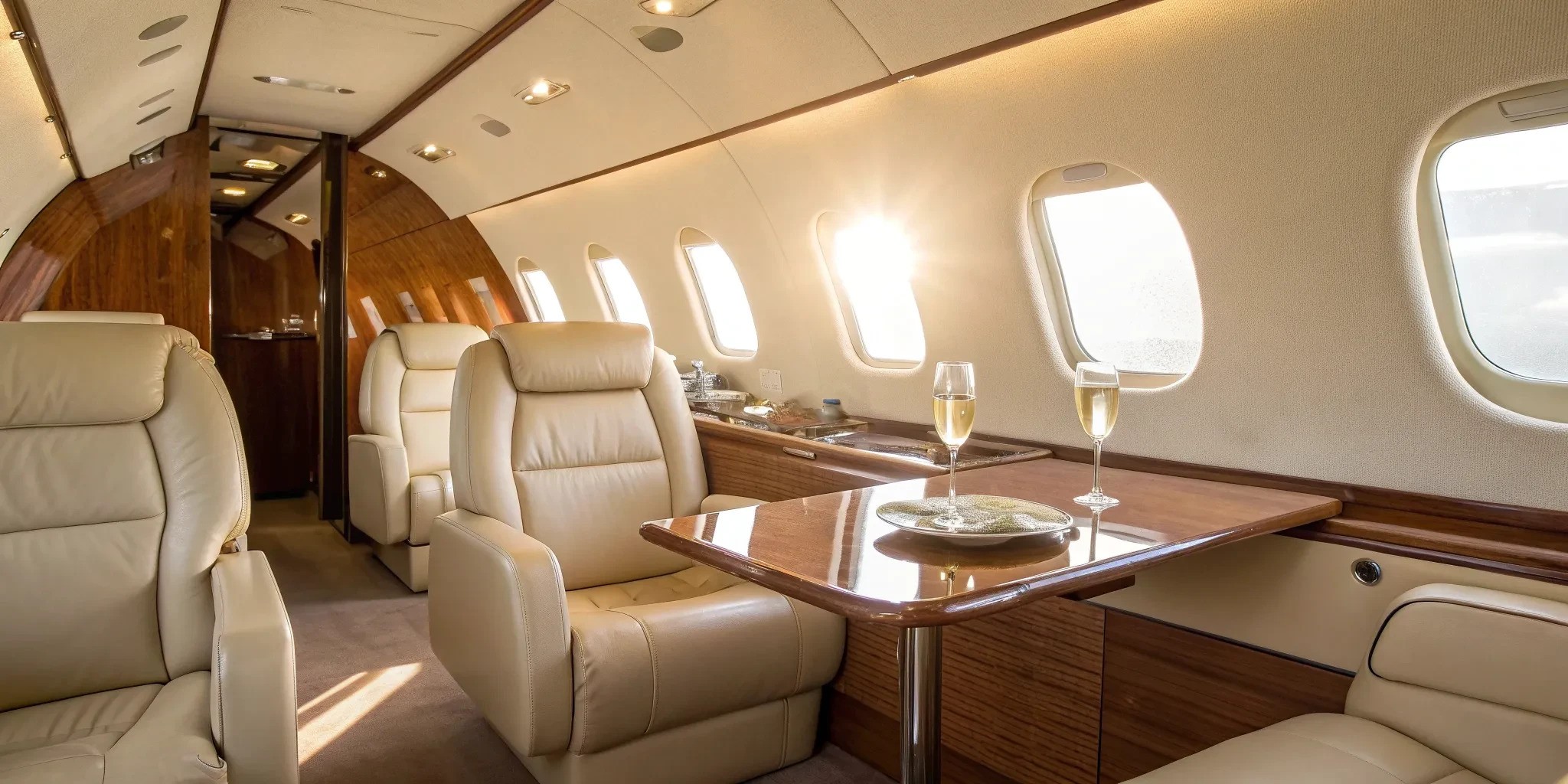
How to Plan a Multi-City Private Jet Itinerary for Corporate Travel
Three cities. Two days. One aircraft. No wasted hours at commercial terminals between each leg.
For corporate travelers, the multi-city private jet itinerary is the highest-leverage use of private aviation, and, paradoxically, the one most frequently underutilised. Most executives think of private jets in terms of a single route: New York to Miami, Los Angeles to San Francisco, Dallas to Houston. What they overlook is that the same aircraft, already scheduled for your trip, can execute a full three- or four-city roadshow in the time a commercial traveler spends navigating a single hub connection.
Planning a multi-leg corporate itinerary well, however, requires a different approach than booking a single route. Route sequencing, aircraft range, crew duty limits, ground coordination, and cost structure all interact in ways that can either make the itinerary seamless or introduce exactly the friction you were trying to avoid. This guide walks through all of it, so you can build a corporate travel plan that delivers the efficiency private aviation promises.

Key Takeaways
Route sequencing is the single biggest efficiency lever: The order in which you visit cities determines total air time, positioning costs, and whether the itinerary is even operationally feasible. Always plan the sequence before selecting the aircraft.
Aircraft range and crew duty limits are your operational ceiling: Multi-city trips compress flight hours into tight windows. Super midsize and heavy jets are the right categories for most corporate roadshows — their range, speed, and crew rest provisions make complex itineraries workable.
A well-structured multi-city itinerary almost always costs less per city than booking separate one-way legs: Because the aircraft moves with you rather than repositioning between each leg, the economics of a continuous roadshow are significantly more favourable than assembling the same trip from individual charters.
Why Private Aviation Transforms Multi-City Corporate Travel
Flying a multi-city itinerary commercially is a study in compounding friction. Each city requires its own booking, its own security queue, its own connection risk. A three-city trip that theoretically spans two days on paper routinely bleeds into three when delays, early check-in requirements, and gate changes are factored in. The larger the group — and for corporate roadshows, groups of six to twelve executives are common — the more pronounced the coordination burden becomes.
The Productivity Argument
The business case for private aviation on multi-city trips is strongest when you measure it in reclaimed hours rather than ticket cost. A corporate team flying commercially between, say, New York, Chicago, and Dallas might spend twelve to fourteen hours in transit across two days — including check-in buffers, connection times, and ground transport to and from commercial hubs. The same itinerary flown on a single private aircraft reduces total transit time to six to eight hours, with meeting-quality working conditions in the cabin between each city.
Think of the aircraft cabin as a mobile boardroom. Sensitive deal discussions, internal strategy sessions, and presentation rehearsals that would be impossible on a commercial flight can happen between legs on a private charter — with the entire team together, uninterrupted. This is not a peripheral benefit; for deal teams, investment in private aviation during roadshow season has a direct return that shows up in the quality of client meetings.
Why a Single Aircraft Makes More Sense Than Multiple Bookings
One aircraft, travelling with your team through every city on the itinerary, eliminates the repositioning costs that accrue when each leg is sourced independently. It also eliminates a category of operational risk: the aircraft is confirmed to your schedule for the duration of the trip, not subject to the availability constraints that can affect individual one-way bookings on short notice.
There is also a practical consideration that is easy to overlook: luggage. A corporate roadshow typically involves presentation equipment, client gift packages, and enough clothing for multiple days. A single aircraft with a known baggage hold removes the variables that can complicate multi-leg commercial travel entirely. Your bags travel with you, on every leg, without a single claim belt.
How to Sequence a Multi-City Itinerary the Right Way
Route sequencing is the discipline at the heart of multi-city private aviation — and it is the step most often skipped when clients come to us with an itinerary that has already been assembled city by city without considering the underlying geography. A poor sequence adds hours of unnecessary air time, increases fuel cost, and in some cases makes the itinerary operationally difficult to execute within crew duty limits.
The Efficiency Principle: Sequence by Geography, Not by Meeting Priority
The most common mistake in multi-city itinerary planning is sequencing cities based on the perceived priority of each meeting rather than the underlying geography of the route. This produces itineraries that zigzag across the continent — New York to Dallas to Chicago, for example — rather than flowing logically from east to west or through a natural arc. The result is unnecessary deadhead air miles, extended flight times, and a crew duty window that compresses faster than it needs to.
The correct approach is to plot your required cities on a map first, identify the most geographically logical sequence, and then apply meeting scheduling constraints on top of that framework. In most cases, a hub-and-spoke or linear routing — where the aircraft moves progressively across a geographic arc rather than backtracking — produces the shortest total block time and the most workable crew schedule.
Planning Around Crew Duty Limits
FAA regulations govern how many hours a flight crew can work within a given period, and these limits have a direct practical effect on what is possible within a tight multi-city schedule. For a Part 135 (on-demand charter) operation, crew duty day limits are typically 14 hours from report time, with flight time limits varying by crew complement and operation type. A standard two-pilot crew on a super midsize jet can typically execute three to four legs in a single duty day — more than enough for most corporate roadshows.
For itineraries that require five or more legs, or that span more than fourteen hours from first departure, two crew options exist: an augmented crew (a third pilot), which extends the available duty window, or an overnight stop that resets the crew clock. Both are manageable solutions, but they need to be factored into the itinerary design from the outset, not identified as problems after the schedule has been committed to clients.
Build in Ground Time — More Than You Think You Need
Private aviation eliminates commercial terminal time, but it does not eliminate ground time entirely. At each city, the aircraft needs 30 to 45 minutes minimum for fuel, ramp handling, and aircraft servicing between legs. Add to this the time required to get from the private terminal to your meeting venue and back — which, even with a car waiting at the FBO ramp, may be 20 to 40 minutes each way depending on the city.
The practical implication is that a realistic ground window at each stop is two to three hours minimum if the meeting requires any meaningful substance. Itineraries that build in less than 90 minutes on the ground at any city are high-risk — a 20-minute weather delay on the inbound leg collapses the entire downstream schedule. Build the schedule with proper buffers, then add the meetings. Never do it the other way around.
Which Aircraft Is Right for a Multi-City Corporate Itinerary?
Aircraft selection for a multi-city trip involves different trade-offs than single-route charter. Range, cabin size, speed, and crew provisions all matter — and the right choice depends heavily on the specific cities in the itinerary, the size of the travelling party, and the total block time required across all legs.
Super Midsize: The Corporate Roadshow Standard
For most domestic US corporate roadshows — three to six cities, a team of six to ten executives, two to three days — the super midsize jet is the standard recommendation. Aircraft like the Bombardier Challenger 350, the Cessna Citation X, and the Gulfstream G280 combine stand-up cabins, competitive range (typically 3,500 to 4,000 nautical miles), and cruise speeds that compress multi-leg block times meaningfully compared to slower midsize options.
The Challenger 350 in particular has become the default corporate roadshow aircraft in the US market — its flat-floor cabin, separate baggage hold, and reliable range make it the practical choice for deals teams that need to work productively between cities and arrive looking the part. Charter rates for this category on domestic multi-city itineraries typically run $5,500–$7,500 per flight hour, all-in cost dependent on itinerary specifics.
Heavy Jets for Larger Groups and International Legs
For groups of ten or more executives, or for itineraries that include a transatlantic or transcontinental leg alongside domestic stops, a heavy jet becomes the appropriate choice. Aircraft like the Gulfstream G550, Bombardier Global 6000, and Falcon 7X offer full stand-up cabins with seating for twelve to sixteen, intercontinental range, and sleeping accommodation for overnight transatlantic legs.
The economics of a heavy jet on a multi-city domestic itinerary need to be examined carefully — you are paying for capabilities that a super midsize doesn't require if all your stops are within the continental US. But for a deal team doing New York, London, and Frankfurt in three days, the heavy jet is not optional. It is the vehicle that makes the itinerary possible without sacrificing the cabin environment that client-facing work demands.
What to Avoid: Undersizing the Aircraft
The most common aircraft selection error on multi-city corporate trips is choosing a midsize jet to reduce cost and discovering mid-itinerary that the baggage hold is full after day one, the cabin is too small for productive team work, or the range requires an unplanned fuel stop on a longer leg. These are not marginal inconveniences — a fuel stop adds 45 to 90 minutes to a leg and can collapse the downstream schedule entirely.
The right approach is to build the aircraft specification from the requirements of the most demanding leg on the itinerary — longest range, largest group, most luggage — and then confirm that it works for all other legs. Sizing down from the aircraft that the hardest leg requires always introduces risk into the schedule. Sizing up never does.
Multi-City Private Jet: Indicative Cost Ranges
Itinerary Type | Typical Trip Length | Best Aircraft Category | Estimated Cost Range |
2-city (domestic) | 1 day | Midsize / Super Midsize | $25,000–$45,000 |
3-city (domestic) | 1–2 days | Super Midsize | $40,000–$70,000 |
4+ city (domestic) | 2–3 days | Super Midsize / Heavy | $60,000–$100,000+ |
2-city (transatlantic) | 1–2 days | Heavy / Ultra Long Range | $90,000–$180,000+ |
Costs are indicative and reflect US domestic itineraries in 2026. International multi-city itineraries carry additional handling, overflight, and crew expenses. Request a quote for a specific itinerary.
What Does a Multi-City Corporate Charter Actually Cost?
Multi-city charter pricing is built on the same components as a single-route charter — base aircraft cost, crew, fuel, handling fees — but with additional factors specific to continuous multi-leg operations. Understanding these components helps you evaluate any quote accurately and compare options on a like-for-like basis.
How Continuous-Trip Pricing Works
When a single aircraft operates your entire roadshow from departure through final return, the pricing structure is fundamentally different from sourcing each leg independently. The charter operator prices the total trip as a block — covering all air miles flown, all crew costs across the duration, and all handling fees at each stop. This produces a total trip cost that, divided across the number of legs, is almost always 20–35% lower per leg than assembling the same itinerary from separate one-way bookings.
The reason is straightforward: on a continuous trip, the aircraft does not return to base between cities, which eliminates the positioning charges that appear as a line item on every individual one-way quote. Those positioning costs — the operator flying the aircraft home after each leg — represent 15–25% of a typical one-way quote on most domestic routes. On a multi-city continuous charter, you do not pay them because the aircraft stays with your team.
Overnight Costs and Crew Accommodation
Any itinerary that extends across multiple days incurs overnight costs for the crew and, in some cases, aircraft hangar or parking fees at each stop. Crew accommodation is typically $200–$500 per crew member per night, which on a two-pilot operation adds $400–$1,000 per overnight stop to the total quote. Some operators include a daily crew allowance within their quoted rate; others list it separately. Always confirm which approach your operator takes when reviewing a multi-day quote.
Aircraft overnight fees vary by airport. At major private aviation facilities — Teterboro, Van Nuys, Midway's private terminals — overnight parking typically runs $300–$800 per night. At smaller regional airports used for convenience stops on a roadshow, fees may be lower. A well-structured multi-city quote will itemise these costs by city and date, giving you complete visibility into the total investment before you commit.
International Multi-City Considerations
For corporate itineraries that cross international borders — a common structure for US companies running European roadshows — the cost and complexity profile increases meaningfully. International overflight fees, handling charges at foreign FBOs, customs and immigration facilitation, and the potential need for international permits on some routes all add to the base charter cost. Expect international multi-city trips to carry 20–40% higher overhead above their domestic equivalent, driven primarily by handling and compliance costs rather than aircraft operating cost.
The most important practical step for international multi-city itineraries is to confirm all required permits and slot restrictions at least 72 hours before departure. Some airports in Europe and the Middle East have strict slot allocation systems that require advance booking — arriving at a facility expecting to land without a confirmed slot is a situation no corporate travel plan should encounter. At TrueSkies, we manage all international permit and slot coordination as a standard part of the booking process, not as an add-on.
The Logistics That Make or Break a Multi-City Itinerary
The flight is the simple part. What separates a seamless multi-city corporate trip from a frustrating one is the quality of coordination on the ground — at every city, for every leg, in every contingency. This is where the difference between a transactional charter broker and a genuine aviation advisor becomes visible.
Ground Transportation: The Overlooked Variable
Every leg of a multi-city corporate itinerary arrives at a private terminal, typically 10 to 30 miles from the city centre. The efficiency of private aviation only translates to business productivity if the ground transportation on each end is equally organised. A car that is late, or sent to the wrong FBO terminal, or navigating an unfamiliar city during rush hour can absorb the entire time advantage of the private flight in one stop.
On a well-coordinated multi-city trip, ground transportation is confirmed at every city before departure — specific vehicles, specific drivers, specific pickup points at the FBO ramp — with a contingency plan if any element changes. TrueSkies coordinates ground transportation as part of every multi-city itinerary we manage. It is not a bolt-on. It is part of the product.
FBO Selection at Each Stop
The FBO (Fixed Base Operator) is the private aviation terminal where your aircraft parks, refuels, and your team transits between the plane and ground transport. Not all FBOs are equal — and on a corporate roadshow where the quality of the experience at each city reflects on the organisation running the trip, FBO selection matters more than most clients initially appreciate.
At major US private aviation hubs — Teterboro (TEB), Van Nuys (VNY), Midway's private terminal (MDW), Houston Hobby's private facility (HOU) — the major FBO operators (Signature, Atlantic, Jet Aviation) provide consistently excellent service: private lounges, Wi-Fi, catering, shower facilities, and valet. At smaller cities, quality varies. A good aviation advisor pre-selects the appropriate FBO at each stop based on operational performance, not just cost — particularly for client-facing itineraries where the ground experience contributes to the overall impression.
Catering Across Multiple Cities
On a multi-leg day — departing at 7am, two cities by noon, a third by evening — in-flight catering is not a luxury consideration. It is a practical necessity for maintaining team performance across a long travel and meeting day. Private charter catering on corporate roadshows typically means breakfast provisioned for the first leg, a working lunch provisioned mid-trip, and light refreshments for the afternoon legs. This is coordinated by the charter operator at the departure FBO for each leg — your TrueSkies advisor confirms preferences at booking and ensures continuity across the entire itinerary.
How TrueSkies Structures a Corporate Multi-City Trip
Managing a multi-city corporate charter is categorically different from booking a single route. The number of variables — aircraft, crew, ground coordination, FBO selection, catering, international permits where applicable, overnight logistics — demands an advisor who manages the complete picture, not just the flight booking.
Itinerary Design from First Principles
When a corporate client comes to us with a list of cities and a window of dates, our first step is never to identify an aircraft. It is to map the itinerary properly: sequence the cities for geographic efficiency, identify the critical timing constraints at each stop, build in realistic ground windows, and assess whether the total block time and crew duty requirements are workable within the proposed window. In roughly one in three multi-city requests, this process produces a revised sequence or timing recommendation that meaningfully reduces cost or operational risk — before any aircraft is selected.
Operator Selection for Continuous Multi-Leg Operations
We work exclusively with Part 135 certified operators who have demonstrable experience in multi-leg continuous operations. This is a specific competency that not all charter operators have — the logistics of managing an aircraft across multiple cities, overnight stops, and cross-timezone scheduling require a different operational posture than single-route flying. We confirm the operator's experience with comparable itineraries as part of our sourcing process, and we remain the point of contact throughout the trip for any schedule changes, weather contingencies, or ground coordination updates.
The TrueSkies Reserve Program for Regular Corporate Travelers
For corporate teams that run multi-city roadshows on a regular basis — quarterly deal roadshows, annual client summits, recurring board meeting circuits — the economics of an ad hoc charter approach eventually give way to a more structured solution. The TrueSkies Reserve program is designed precisely for this client profile: preferred pricing on a pay-as-you-go basis, without the capital commitment of a jet card or fractional share, and with a service standard that is consistent across every trip.
Reserve members booking multi-city corporate itineraries benefit from priority aircraft sourcing, pre-negotiated rates with our preferred operator network, and a dedicated advisor who manages the full itinerary end-to-end. For teams that fly four or more multi-city trips per year, the program consistently delivers 10–20% in cost savings versus the equivalent on-demand rate, alongside a meaningfully reduced coordination burden on the corporate travel manager's side.
5 Multi-City Itinerary Mistakes to Avoid
The most common failures in corporate multi-city charter planning are not failures of budget or ambition — they are failures of planning discipline. These five patterns appear repeatedly in itineraries that arrive to us after an initial attempt elsewhere.
Scheduling Meetings Before Confirming the Flight Logistics
The most expensive planning error in private aviation is committing to meeting times in each city before the flight logistics have been confirmed. When a deal team schedules client meetings in three cities on the same day and then asks an aviation advisor to make the flights work around those commitments, the result is almost always a schedule with insufficient ground time, a crew duty window that cuts close to limits, or an aircraft requirement that the available fleet cannot fully satisfy.
The correct sequence is: confirm the aircraft and operational feasibility first, build the ground windows, then schedule the meetings. Your aviation advisor should be the first call in the planning process, not the last.
Booking the Aircraft Last-Minute for a Peak-Season Roadshow
Multi-city corporate roadshows are heavily concentrated in specific calendar windows: Q1 earnings season (January through March), end-of-year deal closing (November through December), and major conference seasons. During these periods, super midsize and heavy jet availability tightens significantly — and the aircraft most appropriate for a demanding multi-city itinerary is exactly the category under the most pressure. Book multi-city corporate charters at least three to four weeks ahead during peak windows, and six or more weeks ahead for complex international itineraries.
Ignoring Weather Contingency Planning
A multi-city itinerary is a linked chain — a weather delay on the first leg affects every subsequent leg. Unlike commercial travel, where weather delays are largely outside your control, private aviation allows you to actively manage weather risk through departure time adjustment, alternate airport selection, and, in some cases, re-sequencing the itinerary to fly around a weather system rather than into it. None of these options are available if the weather contingency plan hasn't been built into the itinerary from the start.
A good aviation advisor will review the weather forecast for your full itinerary window at the time of booking and again in the 48 hours before departure, flagging any risk points and presenting options before they become problems on travel day. This is a standard part of how we manage multi-city corporate trips at TrueSkies — not an upgrade.
Failing to Confirm Ground Transport at Every Stop
On a single-city trip, a missed ground transport booking is an inconvenience. On a multi-city roadshow, it is a cascade failure. If the car is not at the FBO ramp when the aircraft arrives, the 25-minute meeting buffer is gone, the client meeting is delayed, and the downstream schedule compresses on every subsequent leg. Ground transport confirmation at every stop — specific vehicle, specific driver, specific terminal — is a non-negotiable element of multi-city itinerary management, not a nice-to-have.
Treating the Corporate Roadshow as a Series of Individual Flights
The final and most common structural mistake is approaching a multi-city itinerary as a series of individual bookings rather than a single, integrated trip. Each leg priced separately, each ground coordination element managed ad hoc, each FBO selection left to the operator of the moment. This approach exposes every join in the itinerary to operational risk and consistently produces a higher total cost than a properly structured continuous charter.
The on-demand charter model, properly applied to a multi-city trip, means one advisor, one aircraft, one quote covering the complete itinerary. That is the structure that produces a seamless roadshow — not a series of individual bookings that happen to share the same team.
Related Articles
Request Your Multi-City Corporate Charter Quote
Frequently Asked Questions
How far in advance do I need to book a multi-city corporate charter? For most domestic US multi-city itineraries outside peak season, two to three weeks of lead time gives you access to the full range of appropriate aircraft at competitive rates. During peak windows — Q4 deal season, January through March earnings roadshows, and major conference periods — book four to six weeks ahead for super midsize and heavy jet availability. International multi-city itineraries require additional lead time for permit and slot coordination: four to eight weeks minimum depending on the countries involved.
Can the same aircraft handle all legs of a multi-city trip without a crew change? Yes, in most cases. A standard two-pilot crew on a Part 135 operation can execute three to four legs in a single 14-hour duty day. For itineraries requiring more flying time, an augmented three-pilot crew extends the duty window and allows continuous multi-leg operations without an overnight crew change. For trips spanning more than two days, the crew rests at overnight stops while the aircraft is hangared or parked at the FBO. Your TrueSkies advisor will assess crew requirements as part of the initial itinerary review.
Is a multi-city private charter more cost-effective than booking individual one-way legs? Almost always, yes. Booking a single aircraft for a continuous multi-city trip eliminates the positioning charges that accrue on individual one-way bookings — charges that can represent 15–25% of each one-way quote. For a three-city roadshow, the saving from a properly structured continuous charter versus three separately sourced one-way legs typically runs $8,000–$20,000 depending on aircraft category and routing. Request a quote for both structures and compare them side by side.
What happens if a meeting runs long and the flight schedule needs to change? This is one of the core advantages of private aviation: the aircraft operates on your schedule, not the other way around. If a meeting runs longer than planned, the crew waits. If a city needs to be added or removed from the itinerary mid-trip, your advisor adjusts the plan in real time. Changes to a multi-city private charter itinerary are possible in a way that is simply not available on commercial travel, and they do not require rebooking fees or the friction of commercial change processes. Notify your TrueSkies advisor as soon as you know the schedule is shifting and the logistics are managed from there.
Can private jets access smaller airports that commercial flights don't serve? Yes — and this is one of the most underappreciated advantages of private aviation on multi-city corporate trips. Private jets can access more than 5,000 airports in the United States, compared to approximately 500 served by commercial airlines. This means that if one of your corporate stops is a regional facility, a smaller city, or a location where the nearest commercial airport is a significant drive from your actual destination, a private charter can land meaningfully closer. On a multi-city itinerary where total ground time is already a critical variable, this airport access advantage can save one to three hours across a full roadshow day.
How does TrueSkies handle last-minute changes to a multi-city itinerary? We maintain continuous contact with the operating crew and FBO teams at every city on your itinerary throughout the trip. If your schedule changes — a meeting moves, a city is added, a leg needs to shift by two hours — we manage the downstream coordination in real time: notifying the FBO at the affected city, adjusting ground transportation, confirming updated catering, and managing any permit implications for international segments. This is the operational competency that separates a genuine aviation partner from a booking platform, and it is what our clients rely on when a multi-city trip encounters the inevitable complexity of a live deal environment.
Blog